Reviewing the Christmas Poinsettia Gift Card SVG 1890
As a designer who spends more time staring at stitch simulations than actual fabric, I have learned to be skeptical of digital assets that promise versatility. When Christmas Poinsettia Gift Card Svg 1890 landed on my desktop, my initial reaction was cautious curiosity. The title suggests a greeting card, yet the file format is a 3D SVG, typically associated with laser cutting and layered paper crafts. For an embroidery professional, this presents an interesting challenge: can a design built for physical layering translate effectively into thread?
I decided to put this asset through its paces, not as a paper crafter, but as someone preparing a holiday collection for a boutique client. My goal was to determine if this design could elevate a handmade product or if it was strictly confined to the realm of cardstock.
First Impressions and Visual Mood
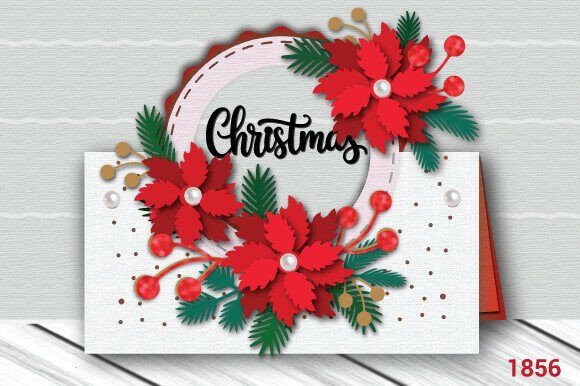
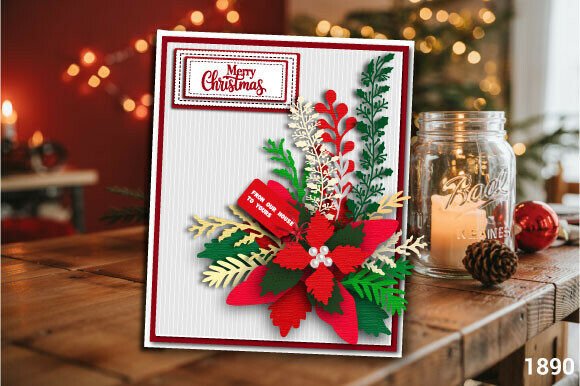
The immediate visual impact of Christmas Poinsettia Gift Card Svg 1890 is one of structured elegance. The seven-layered structure implies depth, which is rare in flat digital files. In embroidery, we usually simulate depth through satin stitch gradients and fill stitch density variations. Here, the depth is inherent in the vector paths. The poinsettia motif is classic, evoking the warmth and tradition of holiday embroidery, but the geometric precision of the layers gives it a modern, architectural feel.
This duality makes it versatile. It does not scream "cheap novelty." Instead, it feels like a deliberate design choice suitable for high-end custom apparel or sophisticated home decor. The layout is balanced, with clear separation between elements, which is crucial for maintaining stitching clarity.
Real-World Application: The Tote Bag Test
To test its viability, I imagined a specific real-life scenario: a limited run of canvas tote bags for a local coffee shop’s holiday merchandise. These needed to be durable, visually striking, and quick to produce. I imported the SVG into my digitizing software to assess how the layers would translate.
For a tote bag design, the seven layers offer a unique opportunity. Rather than stitching every layer as a solid fill, which could create excessive bulk, I considered using the outer layers as applique design boundaries. By cutting fabric shapes for the larger petals and stitching them down with a narrow satin border, I could reduce stitch count while preserving the 3D effect. The inner layers could then be embroidered with dense fill stitches in contrasting thread colors. This hybrid approach leverages the SVG’s structure without overwhelming the fabric.
The result, in simulation, was promising. The design held its integrity even when scaled down. For a sweatshirt embroidery project, such as a crewneck for a family gift, the central motif would sit comfortably on the chest without looking cluttered. The clean lines ensure that the stitch density remains manageable, preventing the garment from puckering—a common issue with dense floral designs.
Navigating Fabric and Hoop Constraints
While the design is robust, it is not without limitations. Embroidery designers must be mindful of where they place Christmas Poinsettia Gift Card Svg 1890. On textured fabrics like terry cloth or heavy wool, the finer details of the inner layers might get lost. In these cases, simplifying the design by merging some layers or increasing the running stitch outlines for definition is advisable.
Similarly, stretchy fabrics pose a risk. If you are attempting baby embroidery on a onesie, the multiple layers of stitching can cause distortion if not properly supported. A cut-away stabilizer is non-negotiable here. For curved surfaces like caps, the rigid geometry of the SVG might not conform well unless the design is significantly simplified or placed on a flat panel rather than the crown.
Dark fabrics require careful consideration of thread color contrast. The poinsettia’s traditional red needs a bright green or gold accent to pop against navy or black. I recommend testing the design in black and white mockups first to ensure the layers remain distinct without relying solely on color differentiation.
Commercial Viability and Brand Value
For Etsy sellers and small shop owners, the perceived value of a product is heavily influenced by its presentation. A design that looks intricate and thoughtful commands a higher price point. Christmas Poinsettia Gift Card Svg 1890 offers that premium look. When used in commercial embroidery, it signals professionalism. Customers associate clean, well-defined embroidery with quality, which builds trust and encourages repeat business.
However, transparency is key. Since this is originally a 3D SVG intended for laser cutting and paper crafts, you must verify the licensing terms before selling finished items. The product description mentions use for clothing and accessories, but it is vital to confirm whether the license covers commercial sale of physical goods or if it is restricted to personal use. Always check the specific license provided with the download.
Practical Designer Notes
Before committing to a full production run, follow these steps to ensure success with Christmas Poinsettia Gift Card Svg 1890:
- Test on scrap fabric: Always stitch out a sample on the exact material you plan to use. This reveals any tension issues or thread breaks.
- Check hoop size: Ensure your machine’s hoop can accommodate the full design, especially if you plan to keep all seven layers intact.
- Review stitch density: If digitizing from the SVG, adjust the density to prevent fabric stiffness. Less is often more in embroidery.
- Inspect small details: Zoom in on the innermost layers. If they are too small for your needle size, consider removing them or enlarging the design.
- Compare backgrounds: View the design on both light and dark fabric simulations to plan your thread palette effectively.
- Confirm licensing: Verify if the asset allows for commercial use in physical products or digital resale.
Final Verdict
Christmas Poinsettia Gift Card Svg 1890 is a surprisingly adaptable asset for the embroidery community. While its roots are in paper crafting, its structural clarity makes it a strong candidate for embroidered patch creation, apron embellishments, and pillow cover accents. It requires a thoughtful approach to digitizing and material selection, but the payoff is a distinctive, high-quality finished product that stands out in a crowded market.
For those willing to experiment beyond traditional embroidery files, this design offers a fresh perspective on holiday motifs. It bridges the gap between digital precision and tactile artistry, making it a valuable addition to your design assets library. Just remember to respect the material limits of your fabric and the technical constraints of your machine, and you will find this poinsettia blooming beautifully in your next project.